Costa Blanca or Costa del Sol beaches – which to choose? A comparison
Katarzyna Wabia
The Costa Blanca is chosen by people who want light, wide beaches with a gentle slope into the water, a warmer sea (often 26–28°C in summer) and more reasonably priced property. The Costa del Sol is the choice for those looking for intimate coves, premium infrastructure and the warmest climate in mainland Spain. Neither coast is objectively better. What decides it is lifestyle and the purpose of the purchase.
Costa Blanca or Costa del Sol – a quick comparison
Feature
Costa Blanca
Costa del Sol
Sand
light, soft, fine
often darker (volcanic and mineral)
Type of beaches
wide, long stretches of coastline
smaller coves, a more rocky coastline
Swimming season
May–October
April–November
Water temperature
often 26–28°C in summer, warmer
can be cooler (Atlantic influence)
Character
holiday feel, “beach lifestyle”, for families
premium: beach clubs, marinas, 5* hotels
Property prices
more reasonable
boutique and luxury segment
What are the beaches like on the Costa Blanca?
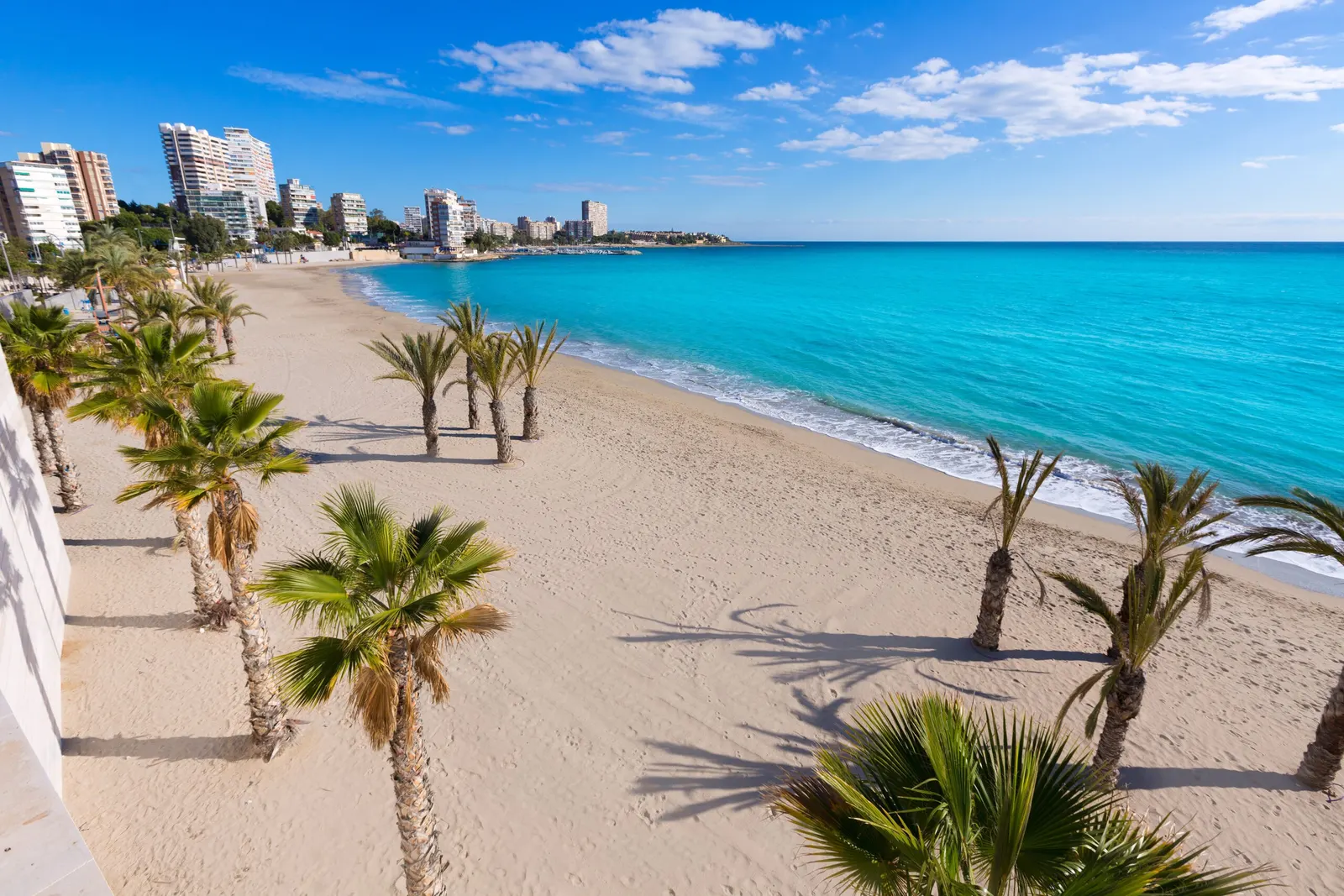
The beaches of the Costa Blanca are among the most recognisable in Spain. Their characteristic features:
light, soft, fine sand, good for families and for walks,
wide, long stretches of coastline, so even in season it is easier to find a free spot,
turquoise, clear water, often awarded Blue Flags,
a light, holiday atmosphere in a “beach lifestyle” style.
The most popular towns: Alicante, Guardamar del Segura, Torrevieja, La Mata, Benidorm, Villajoyosa, Altea, Calpe. For many people it is the Costa Blanca that offers Caribbean-coloured water without leaving Europe. More about the region: Costa Blanca.
What are the beaches like on the Costa del Sol?
the sand is often darker (volcanic and mineral), which is typical of southern Andalusia,
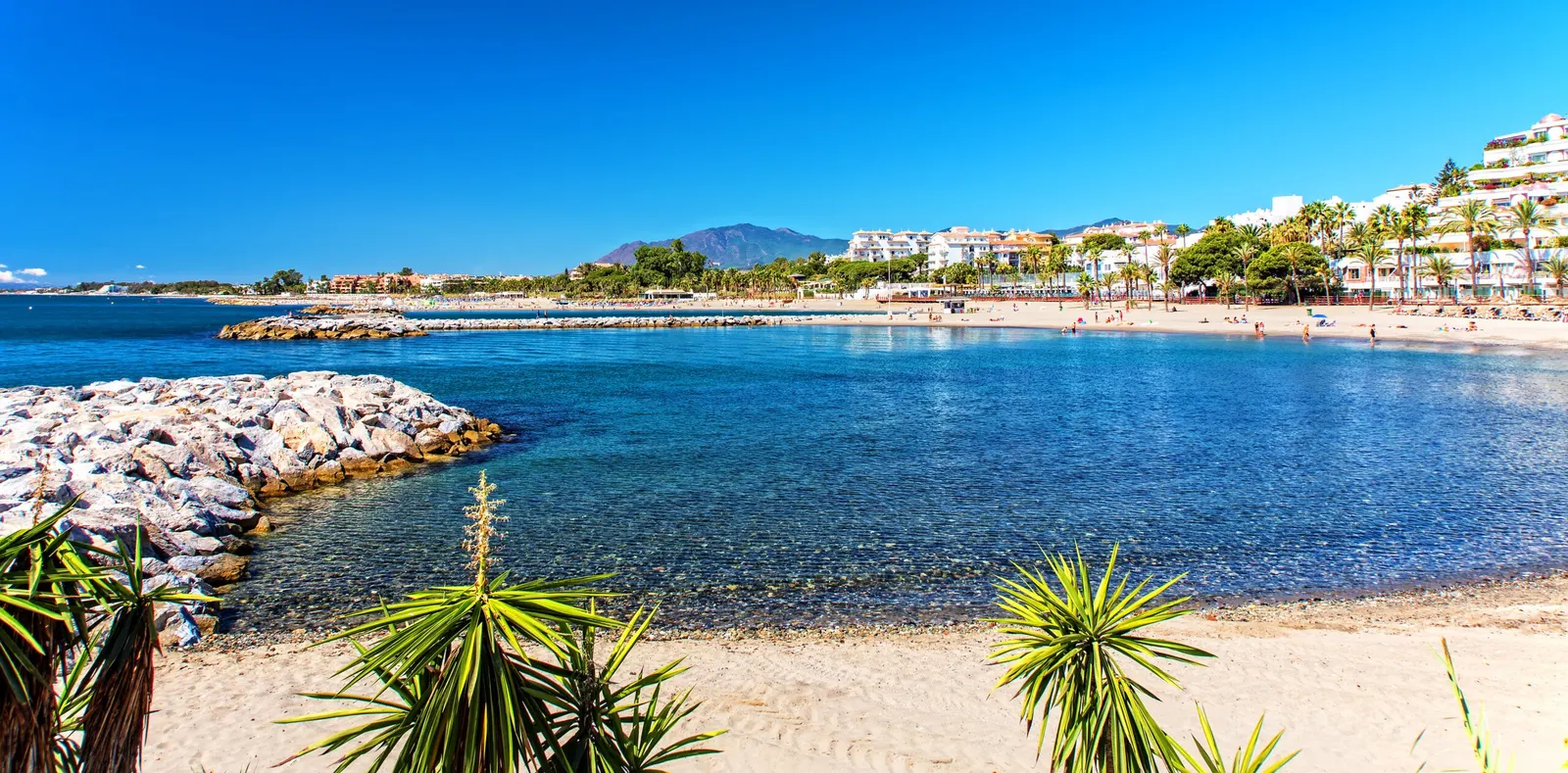
many beaches are smaller, intimate coves for people who value elegance and tranquillity,
the coastline is more rocky, in places rugged and very photogenic,
around Marbella and Estepona the beaches have a distinctly premium character, with beach clubs, restaurants and harbours.
The most popular towns: Marbella, Estepona, Malaga, Torremolinos, Fuengirola, Benalmádena. The Costa del Sol attracts people looking for a premium lifestyle: more “Miami vibe”, less holiday ease. More about the region: Costa del Sol.
Beach in Marbella
Where is the water warmer and the season longer?
Costa Blanca
a warmer Mediterranean,
swimming season: May–October,
in summer the water is often 26–28°C,
winters are milder than in most of Europe, but the water is cooler than in the south.
Costa del Sol
the warmest climate in mainland Spain,
swimming season: April–November,
winter air temperatures are exceptionally high for Europe,
because of the Atlantic influence, the water can be cooler than on the Costa Blanca.
Beach infrastructure: family-friendly or premium?
The Costa Blanca is more family-oriented:
many beaches slope gently into the water,
numerous promenades, bars and long walking and cycling routes,
easy access to the beaches, often without steps or steep descents,
more space, and therefore fewer crowds.
The Costa del Sol is more exclusive:
beach clubs, restaurants, marinas and 5* hotels,
coves that give a greater sense of privacy,
extensively developed premium infrastructure for people seeking a high standard of living.
Which coast for whom?
Costa Blanca, if:
you like light, wide beaches and turquoise water,
you value peace, a holiday atmosphere and plenty of space,
you are looking for property at more reasonable prices,
you want to live close to nature, with the mountains and the sea within reach.
Costa del Sol, if:
you want to live in a premium region with clubs, marinas and luxury infrastructure,
you like intimate coves and an elegant coastline,
the warmest climate all year round matters to you,
you are looking for a villa or an apartment in the boutique segment.
Which coast do buyers choose?
The two coasts answer different needs. The Costa Blanca stands out for its ease, its space and the turquoise colour of its water. The Costa del Sol attracts with luxury, prestige and the atmosphere of Andalusia.
80% of our clients choose the Costa Blanca for its natural ease, its property prices and its freedom of lifestyle.
20% choose the Costa del Sol, because they value prestige, style and intimate coves.
Sample properties from both coasts (all: properties):
Where is the water warmer: on the Costa Blanca or the Costa del Sol?
It is warmer on the Costa Blanca, where in summer it is often 26–28°C. On the Costa del Sol the water can be cooler because of the Atlantic influence.
How long is the swimming season on the two coasts?
On the Costa Blanca the swimming season runs from May to October, and on the Costa del Sol from April to November.
Which coast is better for families with children?
Costa Blanca. Many beaches there slope gently into the water, are easy to reach without steep descents and offer plenty of space, so it is less crowded.
Where is property cheaper?
Property prices are more reasonable on the Costa Blanca. The Costa del Sol is mainly a premium region, with villas and apartments in the boutique segment.
What sand do the Costa del Sol beaches have?
The sand there is often darker (volcanic and mineral), which is typical of southern Andalusia. On the Costa Blanca the sand is light, soft and fine.
Aria Spain sells new properties from developers on the Costa Blanca and Costa del Sol, with no commission for the buyer (0%), and guides the client from the first conversation right up to the handover of the keys. Book a free consultation, or write to hello@ariaspain.com or call +48 601 56 88 44.
To provide the best experiences, we use technologies such as cookies to store and/or access device information. Consenting to these technologies will allow us to process data such as browsing behaviour or unique IDs on this site. Not consenting or withdrawing consent may adversely affect certain features and functions.
Functional Always active
The technical storage or access is strictly necessary for the legitimate purpose of enabling the use of a specific service explicitly requested by the subscriber or user, or for the sole purpose of carrying out the transmission of a communication over an electronic communications network.
Preferences
The technical storage or access is necessary for the legitimate purpose of storing preferences that are not requested by the subscriber or user.
Statistics
The technical storage or access that is used exclusively for statistical purposes.The technical storage or access that is used exclusively for anonymous statistical purposes. Without a subpoena, voluntary compliance on the part of your Internet Service Provider, or additional records from a third party, information stored or retrieved for this purpose alone cannot usually be used to identify you.
Marketing
The technical storage or access is required to create user profiles to send advertising, or to track the user on a website or across several websites for similar marketing purposes.
 Skip to content