 Skip to content



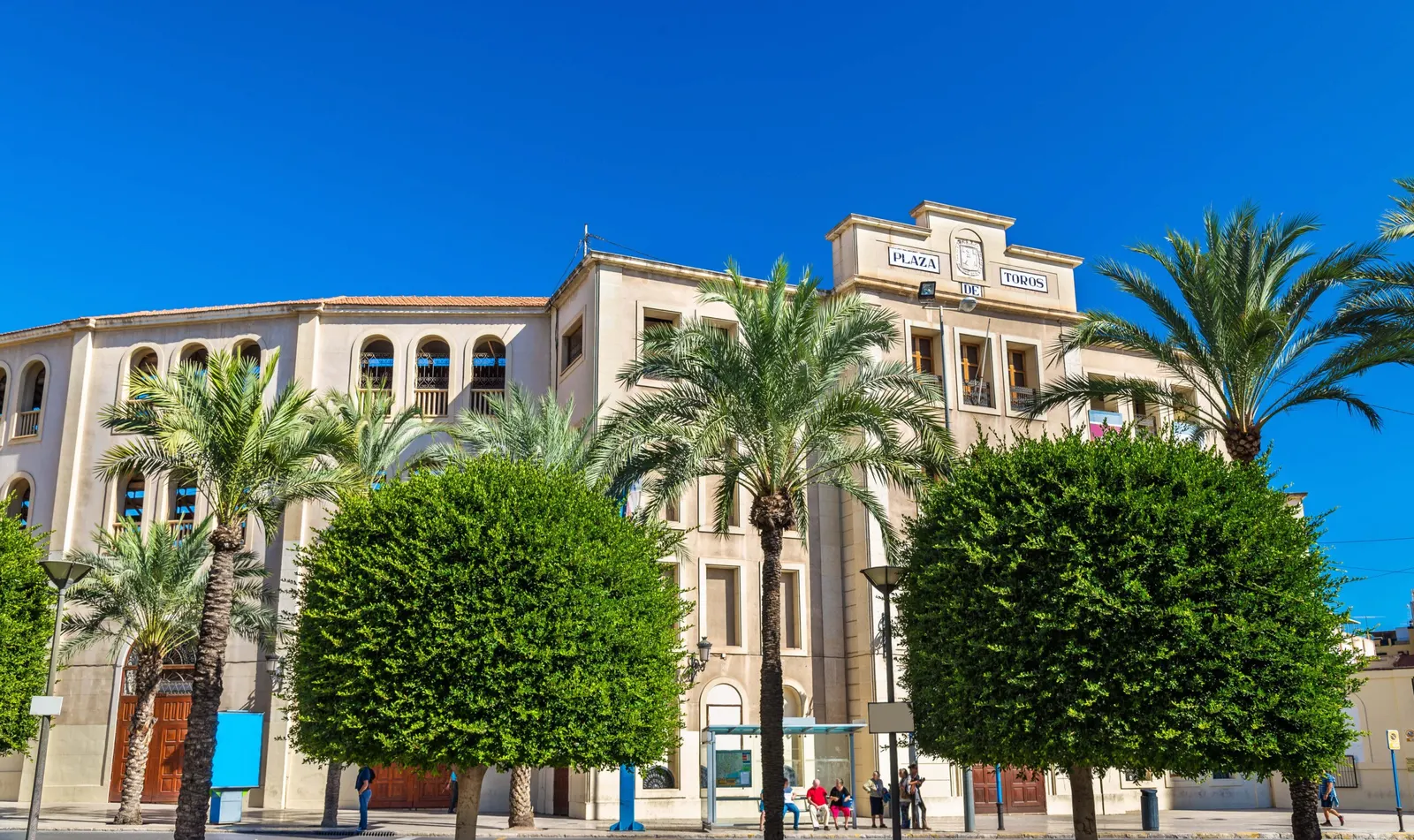
The Plaza de Toros de Alicante is a bullring built in 1848. It is one of the oldest of its kind in Spain and holds around 14,000 spectators. Besides the corridas, which take place mainly in June and August, the arena is now an important cultural centre of the city: it hosts concerts, festivals, performances and exhibitions.
What is the Plaza de Toros de Alicante?
The Plaza de Toros is one of the most distinctive and historic places in Alicante, the capital of the Costa Blanca. Many tourists come to the city mainly for the beaches and scenery. Alicante also has a rich cultural heritage, however, and the arena is one of its important symbols.
History and architecture: over 170 years of tradition
- 1848 – construction of the arena. It is one of the oldest bullrings in Spain.
- 1884 – a thorough renovation, thanks to which the building has survived to this day.
- Style – classical, neoclassical. It has a monumental brick façade and harmoniously designed arches.
- Capacity – around 14,000 spectators. The layout of the stands gives good visibility from every seat.
The arena attracts lovers of history and architecture. Visitors stress the unique atmosphere of a place that for generations has witnessed important historical and cultural events.
When are bullfights held in Alicante?
Bullfights in Alicante take place mainly in June, during the Hogueras de San Juan festival, and in August. In those months the Plaza de Toros attracts lovers of tradition from all over the country.
Bullfighting is deeply rooted in Spanish culture. For many Spaniards the corrida is part of their heritage and a symbol of history. However, a growing number of people want to restrict the custom or ban it altogether. The future of such events is therefore the subject of much debate. Whatever your views, the Plaza de Toros remains an important point on Alicante’s cultural map.

What events are held at the arena apart from bullfights?
The role of the venue goes far beyond bullfighting. Today the Plaza de Toros is an important centre of cultural events. It hosts:
- concerts,
- music festivals,
- theatre performances,
- exhibitions.
The arena has hosted both Spanish stars and international performers. Summer evenings are especially popular, when music and art combine with the atmosphere of a historic venue. It is worth checking the events calendar before visiting Alicante.
How do you get to the Plaza de Toros and what is there to see nearby?
The arena stands in the very heart of Alicante. You can reach it on foot, by public transport or by car. Nearby there are many restaurants and tapas bars where you can try local specialities such as paella alicantina or fresh seafood.
After visiting the arena, it is also worth seeing other places nearby:
- Castillo de Santa Bárbara – a fortress towering over the city, with views of Alicante and the Mediterranean,
- Explanada de España – a seafront promenade paved with coloured mosaic,
- Gravina Museum of Fine Arts (MUBAG) – a place for lovers of Spanish painting and sculpture.
Why visit the Plaza de Toros de Alicante?
For over 170 years the arena has been part of Spanish history, tradition and culture. It is a good destination for anyone interested in history, architecture or music, and for those who want to get to know Spain better. You can come for a concert or an exhibition, or simply to look at the historic building.

Frequently asked questions
When was the Plaza de Toros de Alicante built?
The arena was built in 1848 and underwent a thorough renovation in 1884. It is one of the oldest bullrings in Spain.
How many people does the Plaza de Toros de Alicante hold?
The stands hold around 14,000 spectators. The layout of the arena gives good visibility from every seat.
When are bullfights held in Alicante?
Mainly in June, during the Hogueras de San Juan festival, and in August.
Does the Plaza de Toros host events other than bullfights?
Yes. The arena is an important cultural centre that hosts concerts, music festivals, theatre performances and exhibitions.
What is worth seeing near the Plaza de Toros?
Nearby it is worth visiting the Castillo de Santa Bárbara, the Explanada de España promenade and the Gravina Museum of Fine Arts (MUBAG).
If you want to live closer to Alicante, Aria Spain, a licensed agency with an office in the province of Alicante, will present new properties from developers on the Costa Blanca. The buyer pays no commission, and we handle the whole service in English.